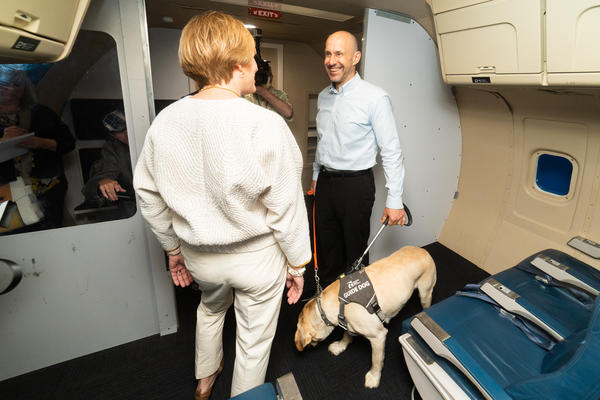
Photo caption: This one-of-a-kind facility, located near gate C16 in Terminal 1 at Minneapolis-Saint Paul International Airport, will enhance the Navigating MSP program by providing a place to experience and become familiar with an aircraft cabin in a serene setting for flyers with sensory, physical or cognitive disabilities, those with fear of flying, and service dogs.
Air travel can be a challenging experience for customers – especially those with cognitive disabilities such as autism spectrum disorder – but there are a number of resources available so it doesn’t have to be.
In addition to Delta-curated tools like multi-sensory rooms, our partners at airports and the Transportation Security Administration can help make the journey an accessible one, no matter what your needs may be.
Eric and Christina Hanson travel frequently with their 10-year-old daughter Bella and encourage others with autism to travel, frequently posting about their journeys on social media. Christina noted that Bella has flown more than 40,000 miles over the last two years, and Delta has provided a wonderful travel experience.
“Every time we've flown, they've always made sure that we could board early with her and let her get situated. They come check on her often to see if there's anything that she needs, they bring extra snacks,” Christina said. “Delta people have made it easier and more relaxing and just embraced her, which has always been amazing.”
Familiarization tours
Delta partners with airports in two of our busiest hubs – Atlanta and Minneapolis – to give families the opportunity to practice in a hands-on environment. The familiarization tours allow families with disabilities to come and practice the process of traveling through an airport in preparation to travel.
- Atlanta tours: On these monthly tours, Delta volunteers guide participants through experiences such as TSA security screening procedures, exploring the terminal and boarding a plane. Participants can also gather "inside flying tips" from volunteers who have connections to people with cognitive or physical disabilities.
- Navigating MSP: This program offers free practice runs through the airport and on aircraft for children and adults who may experience discomfort when flying. Delta has partnered with local authorities to create a mock cabin that can be used when an actual aircraft is not available. The program volunteers are Delta employees who have a family member with a disability. They answer questions and provide friendly advice and encouragement during the tours.
Sensory rooms
To make travel more enjoyable for individuals with sensory sensitivities and their families, there are supportive and safe environments within multisensory rooms. These rooms include calming colors, sounds and activities. Delta created sensory rooms in Atlanta and New York that can be accessed by ticketed passengers based on individual need. Please locate any Delta Red Coat for assistance.
A number of other airports across the U.S., as well as one location in Ireland, offer multisensory rooms for all customers:
- Pittsburgh International Airport: A Concourse
- New York LaGuardia International Airport: Terminal C
- Hartsfield-Jackson Atlanta International Airport: F Concourse
- San Diego International Airport: Between entrance and exit of TSA
- Seattle-Tacoma International Airport: ST Level A gates by the train
- Birmingham-Shuttlesworth International Airport: B Concourse beside Chick-fil-A
- Portland International Airport: Concourse D across from D11
- Myrtle Beach International Airport: Baggage Claim
- Dublin Airport: beside the 400 gates
TSA Cares
TSA Cares is a helpline that provides travelers with disabilities, medical conditions and other special circumstances additional assistance during the security screening process. Travelers requiring special accommodations or concerned about the security screening process at the airport may ask a TSA officer or supervisor for a passenger support specialist who can provide on-the-spot assistance.
Preboarding
One parent can board early to set up a "nest" by getting seated, having all the carry-ons stored under the seat and having any comfort items out and ready for use. Meanwhile, the other parent can stay with the child in the boarding area or just slightly away in a less congested area and wait to board last. Boarding last will allow the jetway to clear and minimize the time sitting idle on the aircraft.
Learning from the Advisory Board on Disability
Delta aims to be the carrier of choice for all customers through thoughtful, reliable and innovative service. For 14 years, Delta has partnered with our Advisory Board on Disability to promote accessible travel for all. This board consisting of 14 frequent fliers and disability experts meets regularly and advises Delta on various items impacting the travel experience for people with disabilities. Delta teams were excited to design the LGA sensory room in partnership with Carol Gray, an expert on autism who sits on the board.

“All these things Delta and its partners do matters and makes a difference for my family,” Eric said. “Bella loves to travel and even hopes to become a Delta flight attendant one day.”


